August 20, 2024
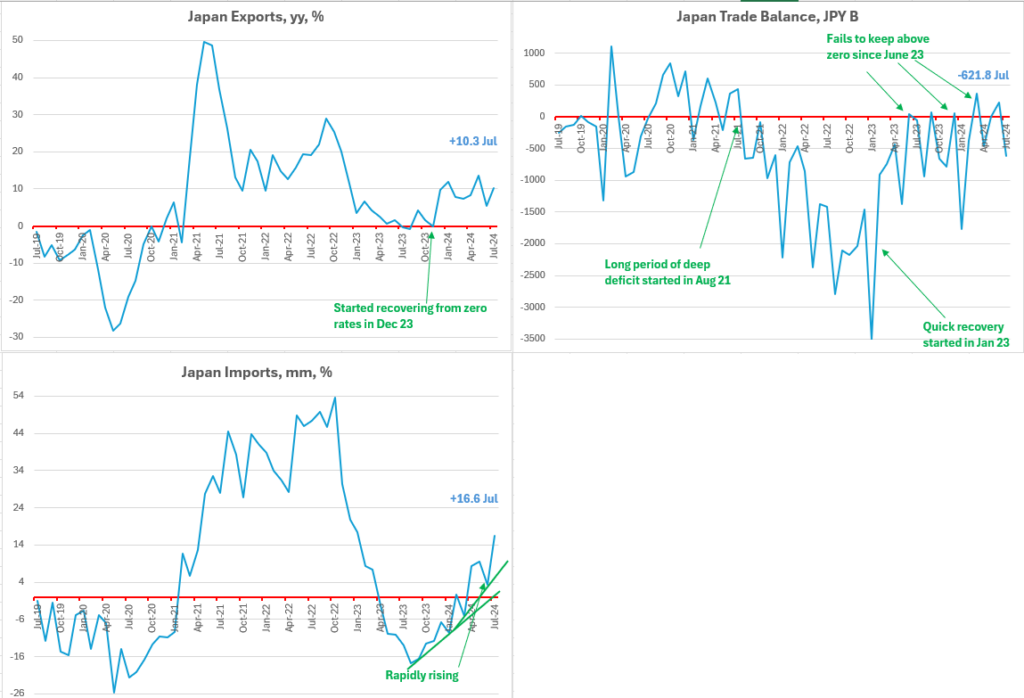
Japan trade deficit was -621.8 JPY billion in July against surplus of 224 JPY billion in June as imports increased by 16.6% and exports only by 10.3%. After rebounding from a deep deficit in the beginning of 2023 Japan’s foreign trading has been remaining mostly negative since June 2023 and up to date failing on all attempts to keep in surplus zone (see chart).
Weakening yen was the major driver of improving in trade balance as its 20% depreciation since the beginning of 2023 made national goods and services more affordable for foreign customers. At the same time exports rate of growth is not strong enough to help the foreign trade become sustainably profitable as the imports grow faster.
Any prospects for more active foreign trading remain dim enough as China, the major trading partner, is still struggling with low consumer confidence. In the case trading deficit turns confidently to deficit it will have negative effect on the dynamic of GDP and consequently on the ability of BoJ to raise rates in an attempt to finish its long-run ultra-easy monetary policy.
⭐️Summary:
Trade balance has been hovering around zero level since last summer despite weak yen due to fast growing import and lagging export as foreign demand remans subdued. If the balance turns steadily to deficit it will negatively affect the economy and make it more difficult for BoJ to keep raising rates.